If you follow my work, you know that in all of my endeavors my focus is to reduce harm. There’s no way to eliminate harm but when you know better you can certainly do better and that gesture alone can ripple into a cascade of awareness and kindness for our collective communities. During all holidays, I find this to be even more important, as during this time of year we want to focus on positive collective impact and not uniformed practices that rely on bypassing burden.
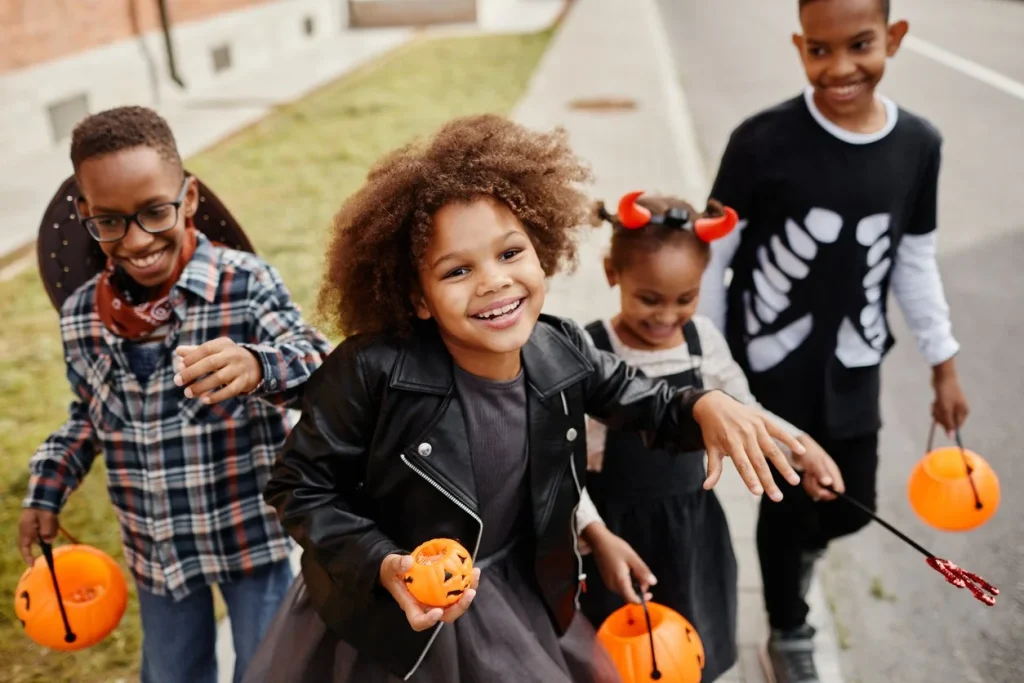
Let us remember that Halloween can be magical for children. From their first costume as babies; dressed as pumpkins with orange cheeks and tiny leaf head pieces, or as adorable kittens and witches, to their excited trick-or-treating years, in the United States this holiday centers around childhood enjoyment. I personally love to see the creativity of each person who comes to my door. If it aligns with your family’s values, there’s nothing wrong with celebrating Halloween. However, as we approach Halloween 2025, it’s crucial for all parents to understand which practices cause real harm.
In American tradition, October 31st marks when the veil between our world and the spirit world grows thin. The custom of scary decorations and costumes originally served a purpose: to blend in with wandering spirits so they wouldn’t target your home or family. Children dress as frightening creatures to disguise themselves from actual threats that are now “among us”. Keeping this in mind, may help clarify why using someone else’s identity or culture as your “shield” is inappropriate.
Lets break down some simple examples:
-
Painting your child’s skin black or brown is never acceptable. This practice has deep historical roots in minstrelsy, which depicted Black people as unintelligent performers existing for white entertainment. No character requires darkening skin to complete a costume when done respectfully.
-
Afros are not costumes—they’re natural hair that grows from people’s bodies worldwide. Wearing disheveled afro wigs perpetuates harmful stereotypes that cast Black hair as “unkempt,” “unprofessional,” or “wild” when worn naturally, and beautifully by Black people ourselves.
-
Deities, religious figures, and cultural identities are not props. Hindu priests, Indian goddesses, Egyptian royalty, and historical figures like the Queen of Sheba are deeply meaningful to millions of people daily and around the world. They’re not tools to “scare away demons” or entertainment for Halloween night.
Halloween offers endless creative possibilities: zombies, witches, vampires, scarecrows, spiders, ravens, ogres, ghosts, skeletons, and countless other spooky creatures. Focus on these traditional elements rather than appropriating identities, cultures, or appearances that aren’t yours to wear for fun or entertainment. Teaching your little ones to stay within the moment
Let’s keep Halloween about children’s laughter, spooky fun, and candy bags they won’t want to share, while ensuring everyone can celebrate and we can actively reduce racial and cultural harm at the same time.