
Proximity Isn’t Understanding

When I write about and to white parents of Black children, I do recognize the complexity that surrounds parenting a reality you cannot fully know, cannot control, and cannot protect your beloved baby from. That is inherently painful, which is exactly why I try to emphasize such awareness around yourself, your partner, and your family’s relationship to racism.

Your proximity to Blackness doesn’t absolve you from a dominant cultural practice built on a lens that “others” people deeming them as less than. Culturally, our language follows this pattern effortlessly; culturally, our opinions of beauty follow it; culturally, our food choices follow it. So do our perceptions of body image, our religious practices, how we eat dinner, how we share, what respect looks like. All of it moves in the same current.

This doesn’t have to get complicated if we simply recognize that the dominant society’s cultural practice is to protect and comfort white, cisgender, heterosexual, affluent men. If you fall outside of those identities, you get limited access to decide how dominant societal cultural practices will serve yourself or others. Some of us follow this cultural practice with absolutely no chance of ever having full access to institutional power the way those chosen identities do. That doesn’t stop the culture from being practiced. We all practice a culture that fully serves that one group, and it was never consensual. We were taught that this transactional way of existing was normal and necessary. The issue is that the better you perform this societal cultural norm, the more you seem to gain favor, perceived control, access, power, and safety. That is enough to keep you comfortable or striving depending on where you fall.

This cultural norm is not designed for people to connect. It is purely designed to function transactionally and to uphold labels of class, race, and societal value. Some people held as less valuable no matter how well they perform this culture’s tenets. It is not meant for growth, or self-love, or understanding of nature and each other. It is not relational in any way.

The issue is, well there’s plenty, but I want us to look at sub-cultural practices that don’t fit inside this dominant societal cultural practice. Depending on your race, region, gender, ability, and economic status, you will compromise yourself to fit in. You will be told it’s necessary; to not make trouble, to get ahead, to be considered for progress and opportunities otherwise unattainable. For people whose natural cultural practice is relational, this act of “code-switching” or “tap dancing” can cause a severe identity crisis. Sometimes consciously, more often subconsciously.

Back to parenting: we want our babies to fit in. We teach them what we know. So if you know that the societal culture will accept your baby better, or that life will be easier because they’re lighter-skinned, or their curls are less coily, or that you as their white parent can “teach them” to behave in a way that’s acceptable to this culture, you are teaching from a place of idealism without acknowledging society’s very real pressure on a child who is Black. If you know that the dominant societal culture punishes Black children, especially boys, for being high energy, we need to understand how many forms discrimination can take, even under what we perceive as good intentions. We need to see how constantly being made to help but never be the star of the play or the class can be experienced as a microaggression, and how over time that can cause serious self-image and self-confidence issues. More importantly, when you qualify their experience as legitimate or not legitimate, you’ve just unconsciously told your child, in more ways than one, that they are on their own in this reality of daily racism.

Your partner may be Black. I’m here to tell you that doesn’t automatically mean they understand the intricacies and layers of how this societal culture has shaped their own reality. They may be wholly uncomfortable with the Black experience as a whole. They may simply have never realized they were being discriminated against themselves. They may not be Black American, and may struggle with the idea that within these United States whether you’re from the Caribbean, an African country, or elsewhere, you are judged by the hue of your skin, and that means you are seen as Black as a native Black Alabamian. We have to remember that just because someone is tall doesn’t mean they play basketball. Being Black doesn’t make you a historian, an activist, or an advocate, or mean you understand the systemic practices of racism, by default.

This is one of many reasons why your proximity to Black people won’t mean “you get it.” It is not comparable to your lived experience. But here is where your agency actually lives: in the moment you choose to investigate. When you don’t know how to proceed, the first move is humility, and the second is action. If your three-year-old feels like something’s off at their daycare, believe them, and find out what it is. If your kindergartner doesn’t think their teacher likes them, don’t settle for the easy explanation, look into it yourself, and put racism on the list of possibilities you’re willing to consider, not off it. The choice, to investigate rather than assume, is not passive! It is one of the most powerful things you can do as their parent, and it’s entirely within your control.

We may not always know what our Black children are expressing, because they won’t, or don’t know how to. But the worst thing you can do is question their experience before you use your own knowledge of systemic racism to rule out that it’s happening in ways the dominant culture will insist are normal. You are their first line of defense, and where we live, racism is on the menu, so work diligently to recognize what’s being served, even when it’s covered in rose-colored B.S.

None of this makes you powerless. Every time you choose curiosity over defensiveness, every time you take your child’s discomfort seriously enough to look past the easy explanation, you become the barrier between them and a world that conspires to ensure they doubt themselves. This is a piece of the work, and it is entirely yours to do. A child who grows up trusting that their parents will believe them, investigate on their behalf, and name what’s real, even when it’s uncomfortable, carries that trust into every room they walk into for the rest of their life. Do this consistently, and you give your child something too few kids get: a parent who sees clearly and acts accordingly. That’s not only protection, starting young enough it is a foundation they’ll stand on long after they’ve outgrown your house.


Understanding your birth team: Doulas vs. midwives

Preparing for the birth of your baby is an exciting journey, filled with important decisions. Among these, choosing the right kind of support for your labor and delivery is crucial. Many parents-to-be wonder about the roles of a doula and a midwife, and whether they should have one, the other, or both by their side. Though these two roles are often mentioned together, they serve distinct purposes during pregnancy, birth, and postpartum. Understanding the differences can help you make the best choice for your birth experience.

First it would be helpful to understand: what is a Doula?

A doula is a trained professional who provides emotional, physical, and informational support to a birthing person and their family. The role of a doula begins during pregnancy and continues through labor, birth, and postpartum. However, it’s important to note that a doula is not a medical professional and does not make any medical decisions or provide any kind of medical care to you or your baby.

So, what does that mean? What does a doula actually do for you? Here are the key responsibilities of a doula:

  • Emotional Support: Doulas help alleviate anxiety by providing continuous encouragement and reassurance during pregnancy and labor.
  • Physical Comfort: They use techniques like massage, breathing exercises, and positioning to help ease discomfort during labor. Each doula has their own special interests, training, gifts and abilities that are unique to them and the support they bring to the families they support.
  • Information and Advocacy: Doulas help parents understand their birthing options, ensuring that they make informed decisions that align with their preferences, be that in hospital, home or birth center.
  • Birth Plan Support: They help in developing a birth plan, making sure the birthing person feels empowered during the experience. Advocacy starts before your labor begins and doulas can provide the knowledge and experience to set the stage for the birth environment you desire.
  • Postpartum Support: Doulas can provide guidance on breastfeeding, emotional recovery, and newborn care during the early postpartum days.

Because doulas don’t perform medical procedures or make clinical decisions, their focus is entirely on the emotional and physical well-being of the birthing person and their family.

If that is the role of a doula, now it would be helpful to understand, what exactly is a midwife?

A midwife is a trained healthcare provider who specializes in low-risk pregnancies and childbirth. They are certified medical professionals who focus on providing individualized care throughout the entire pregnancy, during labor, and postpartum. Many people experience midwifery care as being parent-centered and parent-led, and providing a more empowered and gentle approach to birth.

How do the responsibilities of a midwife differ from that of a doula?

  • Medical Care: Midwives monitor the health of both the birthing person and the baby during pregnancy and birth. They conduct routine checkups, prescribe medications, and manage the delivery process. (Midwives can also provide routine gynecological care, birth control and other medical care, and that can be a blog post for another day!)
  • Labor and Delivery: Midwives are trained to deliver babies and provide hands-on clinical care during the birth process, including managing complications that may arise. The are fully equipped to handle emergencies and often have close relationships with the local and nearby hospitals in the event that a hospital transfer is needed.
  • Prenatal and Postnatal Care: Midwives offer comprehensive prenatal care, guide expecting parents through labor options, and provide postpartum checkups to ensure both the birthing person and baby are healthy.

In conclusion, Doula vs. Midwife: The Key Differences

  1. Medical Training:
    • Doula: Provides emotional and physical support, but does not have medical training or the ability to perform clinical tasks.
    • Midwife: Is a licensed healthcare provider trained in obstetrics and childbirth.
  2. Focus of Care:
    • Doula: Focuses on the emotional, mental, and physical comfort of the birthing person, advocating for their wishes and providing continuous support.
    • Midwife: Focuses on the medical care and safety of both the birthing person and baby, monitoring the labor and delivery process.
  3. Presence During Labor:
    • Remains by the birthing person’s side throughout labor, offering non-stop emotional and physical support and has built a rapport throughout the pregnancy.
    • Midwife: Comes in and out during labor to monitor the birthing person’s progress, but might not be present at all times unless they are the main care provider for the delivery.
  4. Postpartum Role:
    • Doula: Some doulas specialize in postpartum care, helping new parents adjust, offering breastfeeding support, and assisting with newborn care.
    • Midwife: Provides medical postpartum checkups to ensure the health of both the birthing person and baby but may not stay as long for postpartum support.

Do you need both a doula and a midwife?

It’s not uncommon for expecting parents to choose to hire both a doula and a midwife to support them during childbirth, building a holistic and supportive birth team. Having a midwife provides the peace of mind that medical care is handled, while a doula offers continuous, hands-on support throughout labor and delivery. Many parents find the combination of a midwife and doula helps create a well-rounded and holistic support system.

This blog post was written by Jasmine Rose Doula on her blog. We have permission to repost her content, and we’re grateful to share her valuable parenting resources with our community.

Support Through the Fourth Trimester

After spending literal months preparing for pregnancy and childbirth, many families find themselves woefully underprepared once they bring their newborn home. The fourth trimester is fraught with opportunities for fear and anxiety to creep in. It’s easy to get caught up in thinking about how you’ll bring this baby into the world– that the hard work is the birth.

How about the moment you are sent home with this new, wee, fresh and tiny little being you are wholly responsible for? I hear from new parents time and time again that they had no idea what to expect when it came time to bring a new baby home. They felt prepared. They’d read all the things. They attended classes. They got all the supplies (and then some!). But once they arrived at home with baby in arms, things got real and parents were surprised by how hard it all seemed.

Underestimating the Fourth Trimester

They express that they underestimated how trying breastfeeding is (it’s natural, after all!) and didn’t think that it would take up so much of their time. You’re either setting up and preparing to feed, attentively feeding (am I doing this right?), or tending to baby after feeding (how do they dirty so many diapers? Didn’t I just change you?) Add in cleaning bottles or breast pump supplies and it’s reasonable to wonder how you can keep up! Even when feeding your newborn goes swimmingly well, it is still a challenge that takes up immense amounts of time and energy.

Weary parents lament just how unimaginably exhausted they are. They wonder how anyone can parent well under these conditions. Why doesn’t anyone tell the baby to sleep when the parents sleep? For those in two-parent families, they often swap out nighttime duties. Then they feel a sense of sadness in missing their partner while simmering in sleep deprivation. When you add in returning to work or other day-time obligations (hello toddlers at home!!) it seems impossible to carry on.

It is perfectly normal for new families to feel bewildered and overwhelmed and for life to feel like it’s been turned upside down. But there is good news!

You Do Not Need To Do It Alone

There is support and encouragement available in real life! A postpartum doula is an experienced professional specially trained to ease this transition into parenting. Available to come to your home throughout the fourth trimester, postpartum doulas help you find your way and establish a strong and healthy foundation in new parenting. We are able to reassure you what is normal. We can also alert when it’s time to seek medical advice or care. The doula helps you navigate your way through the mystery of life with a newborn. They are present with you through the hard times and can offer a compassionate listening ear as you process your birth and these early weeks and months of new parenting. An established, local postpartum doula is well-connected in your community and can provide resources and referrals as the needs arise.

Let A Doula Help

Making sure you have a postpartum doula on your team means an extra set of hands to help keep the home manageable while you recover from the hard work of birth. This hands-on professional can help with daily tasks to ease your burden and allow for rest and bonding with baby.

This means not sitting at home when you’re too nervous about going out with your newborn. The postpartum doula will teach you the tips & tricks to getting out and about with your baby and can help you feel confident in breastfeeding in public and using your car seat, stroller, and carrier safely.

It means successfully sleeping through the night. Deep, restful sleep, knowing that your baby is in good hands. Exhaustion and sleep-deprivation are real barriers to recovery. Making sure you have the right support in place allows you to have uninterrupted stretches of real sleep, which is invaluable to a new parent.

Having on-site assistance helps new siblings adjust to life with a baby. It makes sure their needs are met, and their concerns are heard.

The fourth trimester is hard. It is a lot of adjusting, trouble-shooting, and navigating. Rather than surviving it, wouldn’t you like to thrive through it? Contact a doula today and ensure you have postpartum support arranged for your fourth trimester.

This blog post was originally published by Avocado Doulas. We have permission to repost their content, and we’re grateful to share their valuable parenting resources with our community.

The Culture, Not the Complexion.

Honey doesn’t come in one shade. It’s pale gold in one jar and near-black in another, and every jar is still, unmistakably, honey. Summer time is coming to an end, and our babies have changed between each shade! It’s wonderful. This is what I want to talk about and help you consider. The color of your childs skin is and is not important to their sense of belonging within the Black community. This can get complicated, so let me give you a brief overview, and leave you with some food for thought.

Blackness, no matter who tells you otherwise, is not dependent on the levels of melanin detected or visible. Blackness is cultural. It is subconscious. It is a spiritual connection. It is a community knowing-ness. This is why you’ll hear people question the validity of Black people raised without Black community, not because their skin is in question, but because access to the culture is. It’s seen as evidence of a severing from the source of our collective strength. Like any cultural or spiritual practice, it is difficult to cultivate in isolation. You need to be taught. You need mentors. You need mirrors to see yourself in dimensions other than your own.

So Black skin has very little to do with whether your child is Black. The issue exists inside a deeply racist society, and that society defines Black very differently. It treats Blackness as a commodified identity, given the value the powers that be decide it deserves. Our society is deeply divided right now about the value of any human life. The value of Black lives is traditionally and historically negotiable and always optionally invalid. So it is essential that, as parents of children society will attempt to devalue, you instill the love and stability of the actual culture of being Black, not the ill-fitted, deranged version society will insist your babies accept.

Community is important. Image and representation are extremely important. Knowledge and foundational emotional support are essential. Self-love can be cultivated anywhere, it just needs more support in places where community is sparse.

One important note: please, please, please do not fall into the idea that Blackness, the culture and connection, looks one way. We are not all churchgoers. We are not all basketball players. We are not all dancers. We are not all socially driven to create change for our people. Don’t take on more than you can chew. Self-love of our skin in all its shades, our hair in all its coil patterns, our lips, our nose goes a long way. The strength found in difference is somewhere every parent could benefit from leaning into: the idea that your child is part of a much bigger picture, a global majority, in fact. That their difference has strength, and is admired and loved by you, and through you.

When someone attempts to measure your child’s Blackness, your child will have enough self-love, respect, and groundedness to know there is no such thing as too Black or not Black enough. Those judgments are projections from people still struggling to hold on to an identity they believe can be compromised. It’s okay. It’s not your child’s battle to fight.

So, for the parents unsure where to start: yes, your children need to experience Black community. Just make sure that exposure is positive and immersive. There are camps, hairdressers, educators to tap into. If they’re not in your city, take the time to find where they are and get involved. At the very least know the basics of our culture as fact, not as a side note to your day. Know the beauty, the growth, the positive contributions of Black people from your own area, they’re there. Know them nationally too. Start there as your reference point, not as a “hey, you should know this,” but as naturally as knowing lemons are tart. It just is what it is. Your confidence and your understanding will let your baby stand fully in their own.

Dripping melanin and honey, in every shade. No apology required.

Choosing a Child Care Program

For parents, finding the right child care program for your family is an important decision. Here are important things to consider when choosing where to enroll your child or children.

Basic Family Needs

  • Consider the location. Look for schools that are conveniently close to your home or daily commute.
  • Determine whether you need full-time or part-time care. Find out if the schedule and hours of operation will work for your family.
  • Research average tuition costs in your area and determine what you can comfortably afford, keeping in mind that financial aid or state subsidies may be available.

Types of Child Care

  • Center-based Child Care (offered in a classroom-like setting)
  • Home-based Child Care (offered in a provider’s home)
  • School-based Child Care (offered in a public school setting)

Visit the Program

  • Take a tour, observe closely, and ask lots of questions.
  • Get familiar with the policies, philosophy of care and education, guidance strategies, special needs support, and daily routines. Ask to review the parent handbook.
  • Make sure safety and health needs are being addressed.
  • Look for evidence of positive relationships and interactions.

Teachers and Staff

  • Ask about the experience, education, and ongoing professional development of the staff.
  • Confirm adequate teacher-to-child ratios and general supervision.

Learning Environment

  • An environment that is developmentally appropriate for young children will encourage hands-on play and joyful exploration.
  • There should be adequate space indoors and outdoors for movement and activities.
  • Check what materials and activities are available for children and whether they encourage exploration and engagement.

Family Engagement

  • Explore ways that the program encourages parent involvement.
    Ask how the program provides information and communicates with parents.
  • Check on opportunities for families to participate in decision making and goal setting for their child and the program.
  • Explore how home languages and culture will be supported.

After touring and reviewing your options, trust your instincts and see which environment feels like the best fit for your child’s unique personality and temperament.

When in doubt, it can be helpful to ask people you know and trust about local options and their experiences.

Two Scoops and a Ponytail: Caring for Black and Brown Babies This Summer

Summertime is here and thriving. It’s hotter than we can ever imagine, and for our brown babies, there’s a lot to consider. The aesthetics of summer are one thing, but the ongoing care of these babies is something deeper, it’s a practice of cultural connection, and getting fluent in it can help parents who are not Black or Brown feel more grounded in raising a child who the world will insist belongs to a community they themselves didn’t grow up in.

I hear a lot from white parents about the experience of “Black Aunties” offering advice, often when the parents feel like they’ve already done everything right. Some welcome it. Some feel confronted by it. Some of you have no Black references outside of YouTube and Facebook groups, and I’m not here to judge either way. As a Black woman, parent, and grandmother who works in growth and development coaching across several sectors, I can tell you the concern comes from love. The Black community doesn’t separate children raised by other communities, biracial or not, from the center of community care. Slavery may not be visible in our society anymore, but the subconscious belief in a right of ownership over Black and Brown bodies still is.

I’ve said this before and I’ll say it again: most of the work I do with biracial Black and white adults who were deeply harmed as children. Ninety-nine percent of them recognize that their first, and ongoing, experiences of racism came from their own family.

That’s not just heartbreaking. It’s complicated, and it goes straight to the core of their ability to build an honest sense of who they are in either community they belong to.

What I’m offering here is a surface-level start. It is an early, practical awareness of how your baby will need to navigate the social ups and downs they’ll inevitably face. This kind of “knowing” is just the beginning of a practice that’s standard in Black and Brown communities. It’s expected the way it’s expected that you’d use a fork to eat noodles. It’s common sense. And it starts somewhere very simple: skin and hair.

I hope most parents have learned by now that lotion by itself isn’t a long-term solution for richly melanated skin, it just doesn’t last. Solution mixes with high levels of shea butter, cocoa butter, and coconut oil are fantastic for baby’s skin, all the way through adulthood. Those oils on their own, whipped, are sometimes even better.

What people usually get wrong isn’t what they buy but it’s how often they apply it. This isn’t a once-after-bath situation, especially in summer, and even more so in winter. You apply it multiple times a day. It should live in your diaper bag, your carry bag, and eventually their locker in middle school and high school. How well you care for your Black and Brown baby’s skin is a real indicator of how well you’re caring for them, period.

This is tradition and connection, not vanity. Beauty is a fortunate bi-product. Beyond leaving their skin bright and shiny, you’re giving your baby a massage and connecting with them multiple times a day. As they get older, they’re connecting with their own body doing it themselves and it genuinely massages the lymph nodes. It’s a healthy practice all around.

It’s summer, so water play is probably on the weekly schedule if not daily, which means oils and lotion mixes are necessary, but let’s talk about hair.

Please, please, please check on the health of their hair. Afro-textured hair needs love almost immediately after water play, to avoid knots and the tears that come with combing them out. A spray bottle with water and a little conditioner mixed in is a great tool to use right after water play ends. Brush through it quickly while it’s still wet, spray it, and pull it into a quick ponytail; your kiddo will feel taken care of, look cute, and feel on top of the world before they pass out in the back seat on the way home. Side note: Wide brushes, wide tooth combs, or split back brushes (a detangling brush) especially work well to keep their curls and coils intact when brushing through them.

Just make sure not to leave their hair in a wet ponytail for longer than the car ride. If it’s taking a while to dry, their scalp needs air. Adding tea tree oil to their scalp (if there are no allergies at play) can also help protect against fungus. If your baby’s hair is long enough, I’d suggest braiding it. It doesn’t need to be fancy for water play. Simple four-square braids work well: easy up, easy down.

One more note on hair, for the love of all things inclusive: please add the appropriate oils to your baby’s hair, even if they only have “two scoops” of hair — short and just budding. A scalp massage encourages oxytocin, dopamine, and all-around cuddle vibes. Not every baby loves a head rub, but taking care of their scalp and hair matters regardless. Even this minimal approach supports healthy hair growth and scalp health for the long run.

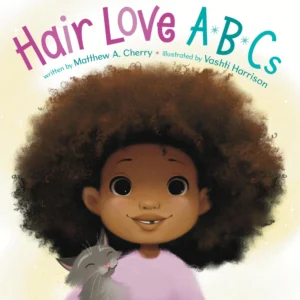
A great book to read with kiddos who struggle with the beauty of their hair is Hair Love ABC’s by Cherry Matthew, A. Harrison, Vashti, Cool Cuts by Mechal Renee Roe, I am Enough Grace Byers are a few. Whichever you find by googling “ Books for Black hair love for children” and read it early and often. Same goes for skin: start the self-love affirmations early, too.


Hair Love ABC’s by Cherry A. Matthew

Cheers to summer. Cheers to shiny, moisturized baby smiles, to well-oiled curls and ponytails jumping for joy. Parents, you’re doing great. Go enjoy the sunshine.

New Report Highlights Gaps in Support for Pregnant and Postpartum Families in Lane County

The Parenting Education & Resource Assessment in Lane County (2024–2025), authored by Simone Mendes, reveals critical gaps in services for local pregnant and postpartum individuals, new parents, and families with young children. Conducted by The Early Childhood Hub of Lane County in partnership with PacificSource Community Solutions, the report draws from a small but diverse set of parent voices and provider perspectives, including doulas, public agencies, and nonprofit organizations across the county.

Read the report